Ogun PCC Boss, Akinleye Seeks Stronger Media Partnership, Urges Nigerians to Embrace Alternative Dispute Resolution
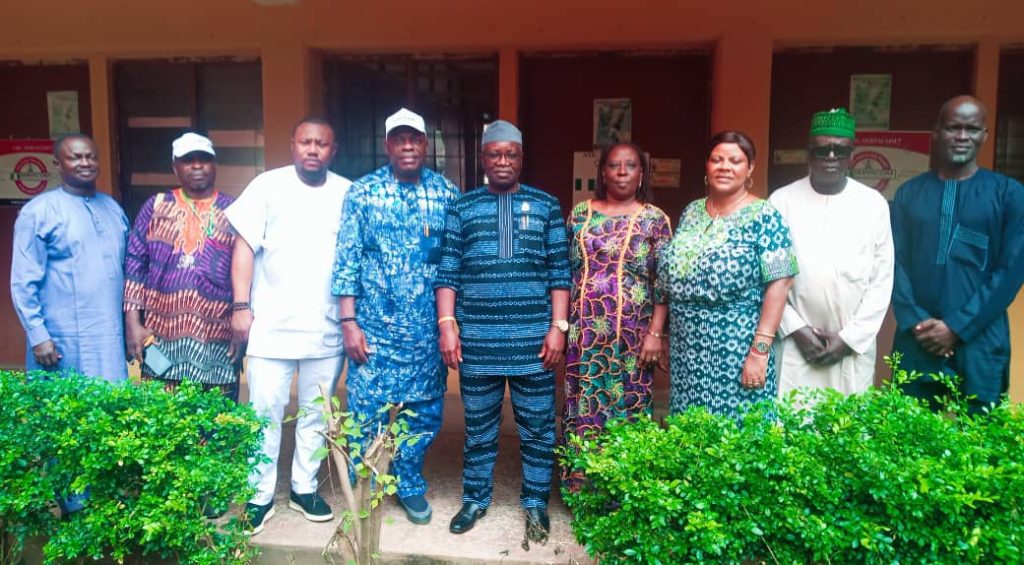

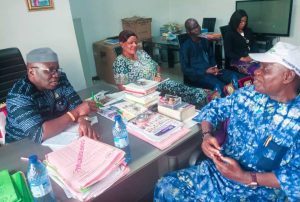
The Federal Commissioner of the Public Complaints Commission (PCC), Ogun State, Hon. Morakinyo Ogo-Oluwa Akinleye, has called for stronger collaboration between the Commission and the media, stressing that effective media partnership remains critical to creating greater public awareness about the mandate and services of the Nigerian Ombudsman.
Akinleye also urged Nigerians who experience administrative injustice or have complaints against public or private institutions to take advantage of the Public Complaints Commission’s Alternative Dispute Resolution (ADR) mechanism before resorting to more confrontational or prolonged approaches.
The Ogun State PCC boss made the call at the weekend while playing host to members of the League of Yewa-Awori Media Practitioners (LOYAMP), led by its Convener/National President, Elhadj Abu-Satar Hamed, during a courtesy visit to his office at the Federal Secretariat, Oke-Mosan, Abeokuta, on Friday, August 14, 2026.
According to Akinleye, the Commission has, over the years, intervened in numerous cases involving administrative injustice, particularly complaints by workers in the private sector who were denied their entitlements, salaries, benefits and other legitimate emoluments.
He explained that the Ogun State office of the Commission had successfully facilitated the recovery of substantial financial entitlements for aggrieved workers and helped resolve several disputes between employees and their employers without necessarily resorting to litigation.
He added that the Commission had also handled numerous complaints involving residents and public institutions, including government agencies, parastatals and other establishments.
Akinleye, who described the Public Complaints Commission as Nigeria’s Ombudsman, recalled that the institution was established in 1975 by the administration of the late Head of State, General Murtala Mohammed, to address administrative injustices and provide citizens with an avenue to seek redress.
He disclosed that the Ogun State office had helped complainants recover more than N100 million in unpaid entitlements and other emoluments after formally presenting their complaints to the Commission.
According to him, the Commission’s intervention has provided relief to many Nigerians who might otherwise have been compelled to embark on lengthy and expensive legal processes to obtain what was legitimately due to them.
He explained that the Commission operates a structured process for handling complaints, beginning with the formal submission of a complaint by the aggrieved party.
Once a matter is formally lodged, he said, the Commission may convene a Case Conference, where the parties involved are invited to sit at a roundtable and present their respective positions.
The process, he explained, gives both the complainant and the respondent an opportunity to state their cases, provide necessary explanations and work towards an amicable resolution.
Where an issue cannot be resolved through the Commission’s Alternative Dispute Resolution mechanism, Akinleye said the matter could be referred or escalated to the appropriate authority, depending on its nature.
Such referrals, he explained, could be made to the police, industrial court or other relevant government agencies with the statutory responsibility to handle the matter.
Reflecting on his experience since assuming office in October 2024, Akinleye said one of the major challenges he encountered was the low level of public awareness about the activities and mandate of the Commission in Ogun State.
“When I resumed here in October 2024, I discovered that the awareness about the PCC in the state was at its lowest ebb. So, I started to appear on radio and television programmes to sensitise the public about the agency and what we do”, he said.
He stressed that the media had an important role to play in ensuring that more Nigerians understand where and how to seek assistance whenever they encounter administrative injustice.

“Essentially, there is the need for us to partner with the broadcast, print and online media platforms. We are performing a constitutional role, which we appreciate, and of course, our activities are solidly backed by an Act of Parliament”, he said.
Akinleye explained that the fundamental responsibility of the Commission was to provide redress where citizens suffer administrative injustice in both the private and public sectors.
“We are established to correct administrative injustice in the private and public sectors,” he disclosed.
The PCC boss expressed concern that many Nigerians continue to suffer different forms of administrative injustice without knowing where to seek appropriate redress.
He said the situation underscored the importance of continuous public enlightenment and closer collaboration between the Commission and the media.
Akinleye stressed that citizens needed to be encouraged to speak out and formally present their complaints so that such grievances could be investigated and addressed through the appropriate channels.
He said the Commission’s approach was deliberately conciliatory rather than confrontational, with emphasis placed on dialogue, investigation and peaceful resolution.
“We are not magisterial in our approach; we use the Alternative Dispute Resolution model, and we have been achieving a lot of results. In recent times, we have resolved over 100 cases brought before us”, he stated.
He further explained that cases which could not be resolved within the Commission’s mandate were referred to the appropriate authorities for further action.
“However, any case we cannot resolve, we do a referral to the police or any other agency that could handle such a case. But we’re happy people are now getting to know our activities in the state”, he added.
Earlier in his remarks, the Convener/National President of LOYAMP, Elhadj Abu-Satar Hamed, thanked Hon. Akinleye and members of his management team for receiving the association.
Hamed explained that LOYAMP was established as an independent professional association of media practitioners committed to advancing the interests of Ogun West and promoting the journalism profession within the region and beyond.
He noted that the peculiar socio-economic, cultural and geographical diversity of Ogun West made wider grassroots media engagement and decentralised media representation imperative.
According to him, the creation of LOYAMP was informed by the need to address gaps in media representation and ensure that the voices, activities and developmental aspirations of communities across Yewa-Awori receive adequate attention.
“The media landscape in Ogun West deserves broader representation. The expansive socio-economic, cultural and geographical diversity of the Ogun West Senatorial District requires wider grassroots engagement and more decentralised media representation. This reality, among others, informed the establishment of LOYAMP”, he said.
Hamed further explained that the association was also established to bridge the representation gap for indigenous media professionals within Ogun West, while contributing to the overall development of the region through responsible journalism.
He said the organisation was committed to informing, educating and entertaining the public, while using the media as a tool for community development, democratic participation and social advancement.
“Our membership comprises experienced media practitioners whose professional activities continue to contribute significantly to public information, community development, responsible journalism and democratic engagement across Yewa-Awori and beyond”, he stated.
The courtesy visit provided an opportunity for both the PCC and LOYAMP to explore areas of mutual collaboration, particularly in the areas of public enlightenment, citizens’ access to information, responsible journalism and increased awareness of the Commission’s dispute-resolution mechanisms.
The engagement also underscored the important role of the media in connecting government institutions with the people and ensuring that citizens are adequately informed about the avenues available to them when seeking redress for administrative injustice.