Nigeria @66: Apostle Suleman Demands Accountability from Leaders, Says Citizens Have No Business with Poverty
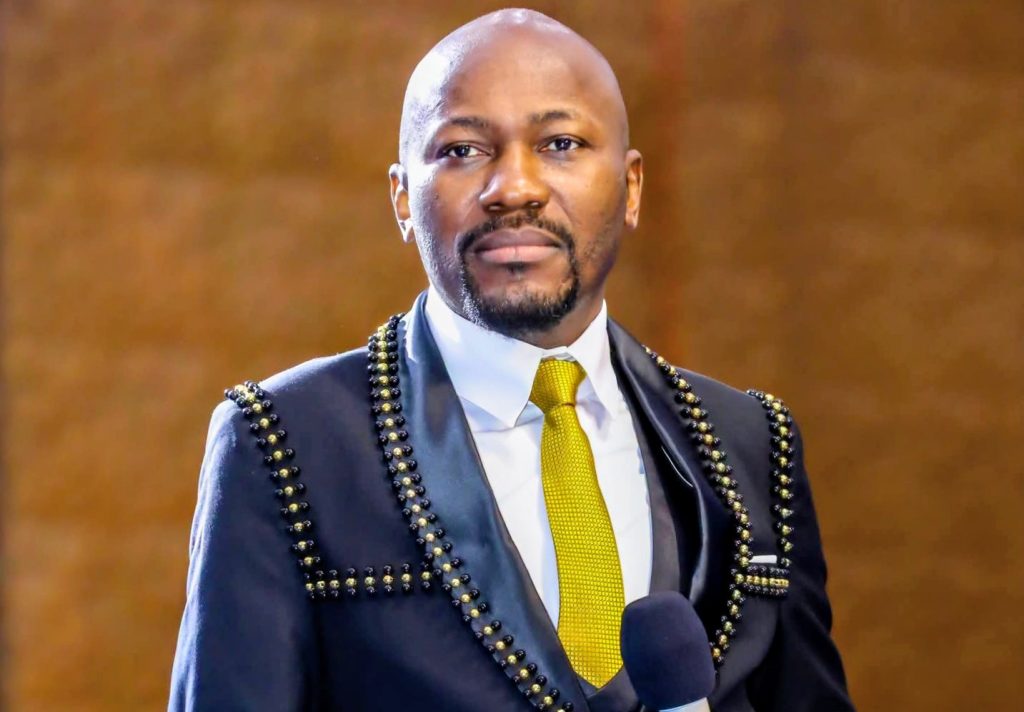

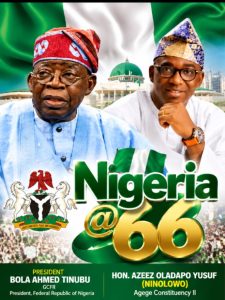
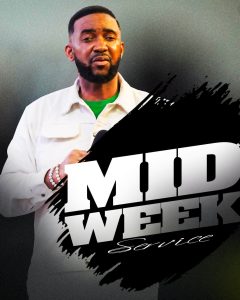
As Nigeria observed its 66th Independence Anniversary, the Senior Pastor and General Overseer of Omega Fire Ministries (OFM) International, Apostle Johnson Suleman, has delivered a solemn assessment of the nation’s economic state. The ‘Restoration Apostle’, in the special message to commemorate the august celebration, called on citizens and political leaders to rise from slumber to build a truly self-reliant country, declaring that the vision of Nigeria’s founding fathers has been compromised by prolonged economic dependency.
Reflecting on the historical significance of the anniversary, Apostle Suleman paid tribute to nationalist pioneers who laid the country’s foundation. He specifically recognized Chief Anthony Enahoro, who famously moved the motion for self-governance in parliament.
“When the founding fathers of our great nation Nigeria fought for the nation’s independence, they not only wanted the country to be free politically, they also wanted her to be free economically and productively,” Suleman noted.
The famous evangelist pointed out a clear contrast between Nigeria’s sovereign identity and its industrial capacity. He remarked that despite indigenous leaders controlling the country’s administration across all ethnic groups for decades, the nation has failed to process its vast raw materials domestically.
“Our colonial masters gave governance back to our indigenous leaders with the expectation that we would convert the cornfields to cornflakes, the cotton farms to cloth, and the sugarcane plantations to sugar,” he stated.
While lamenting the country’s persistent reliance on foreign goods, Suleman argued that true freedom remains unachieved, emphasizing that the country continues to export raw assets while importing basic refined necessities. He noted: “Indeed, Nigeria became free politically but bound economically,” Suleman said. “We still have to import everything, well, almost everything, from China, America, India, or Indonesia.”

Apostle Suleman expressed deep frustration over the persistent poverty affecting regular citizens despite Nigeria’s status as a major oil producer. He argued that the continuous reliance on foreign refineries for fuel and other everyday necessities exposes a failure to convert natural wealth into local value. “We have so much as a country but have so little to show for it,” the cleric asserted, adding that Nigerians should have no business with poverty.
The servant of God blamed the country’s current economic struggles directly on an apparent disconnect between political figures and the population they serve. He characterized Nigeria as a “sleeping giant” whose vast industrial, human, and resource potentials remain completely unexploited. “We have potentials that remain untapped, not because they are hidden, but essentially because we have leadership that is unwilling and that is unconnected to the people,” he explained.
Suleman also addressed the widespread perception that public officials operate without regard for the electorate. He reminded leaders that their political authority originates from the people, urging them to prioritize public welfare over political entitlement. “Our leaders act like they chose us, whereas we chose them,” Suleman observed. “They mostly act like they are doing us a favour, not realizing that the power of the people is always greater than the people who are in power,” he warned.
To change the country’s trajectory, the religious leader insisted that both the public and political office holders must embrace a culture of transparency and proactive governance, warning that leadership roles require the fulfillment of constitutional mandates rather than expressions of helplessness.
Suleman, while emphasizing that transforming Nigeria into a prosperous state requires a unified approach involving civil society, political actors, and religious organizations, urged elected officials to take the initial step by establishing transparent standards for public administration.