
Adedeji Orunkoyi’s Bottle2Meal: Turning Waste into Wealth, Bottles into Meals, Recycling into Movement for Change by Kayode Alfred


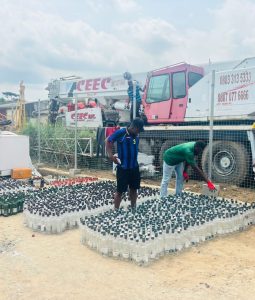
In a country where discarded bottles litter streets, choke drainage channels and accumulate in open dumps, Adedeji Orunkoyi is advancing an idea that challenges the conventional understanding of waste.
Through Bottle2Meal, the experiential marketing architect and live event curator is seeking to transform what many discard without a second thought into a resource for industry, an instrument of environmental renewal and a source of nourishment for communities in need.
It is an ambitious proposition: that the bottle abandoned after a night out can become part of a chain of value creation, connecting hospitality businesses, recycling operators, corporate partners and vulnerable households in a shared enterprise of sustainability.
At its heart, Bottle2Meal is an attempt to make environmental responsibility tangible. Rather than treating recycling as an isolated exercise in waste collection, the initiative connects the recovery of used glass bottles with the recycling industry and community feeding programmes. Its underlying philosophy is simple but consequential: waste should not be the end of a product’s usefulness, and environmental action should deliver benefits beyond cleaner streets.
For Orunkoyi, the opportunity lies in making sustainability practical, participatory and socially relevant.
Beyond the Bottle: The Business of Environmental Responsibility
Nigeria’s waste management challenge is as much an economic concern as it is an environmental one. The improper disposal of solid waste contributes to blocked drains, degraded neighbourhoods and avoidable pressure on public infrastructure. Glass bottles, although recyclable, can become persistent fixtures of the urban landscape when collection and recovery systems fail.
Bottle2Meal seeks to intervene at this point in the waste chain.
The initiative collects used glass bottles from partner outlets, processes them into cullet — crushed recycled glass — and channels the material back into the glass manufacturing value chain. In doing so, it gives discarded bottles another productive life while supporting the recovery of a material that can be recycled repeatedly without losing its fundamental quality.
The model reflects the principles of a circular economy, in which materials are kept in productive use for as long as possible rather than being discarded after consumption.
Recycled glass can reduce demand for virgin raw materials and lower the energy required in glass production. The environmental gains, however, depend on efficient collection, transportation, processing and manufacturing systems. The greater the volume of suitable glass recovered and successfully reintegrated into production, the greater the potential to reduce waste and conserve resources.
Bottle2Meal’s proposition is therefore not merely about picking up bottles. It is about building a functioning chain between the point of consumption and the point of industrial reuse.
When Recycling Meets Social Impact
What gives Bottle2Meal its distinctive character is the social dimension embedded in its recycling model.
According to the initiative’s description, recovered glass supports feeding programmes in selected communities. The concept brings together two concerns that are often addressed separately: environmental degradation and the need for community assistance.
This connection gives recycling an immediate human dimension. A discarded bottle becomes more than an item removed from the street; it becomes part of a system intended to generate social value.
The strength of the idea lies in its ability to make participation meaningful. Businesses can contribute to responsible waste management, recycling operators can recover valuable materials, and communities can benefit from feeding interventions linked to the programme.
For the model to achieve lasting credibility, transparency will be essential. Clear reporting on the volume of glass recovered, the communities reached, the meals provided and the programme’s environmental outcomes would help establish its impact and demonstrate how effectively the initiative converts collection into measurable social benefits.
Such accountability would also strengthen the case for other businesses and institutions to participate.
Orunkoyi’s Vision: Building a Movement, Not Just a Recycling Enterprise
Orunkoyi has framed the initiative as something larger than a conventional recycling operation.
“Bottle2Meal is more than a recycling company. It is a movement for cleaner streets, safer communities, and a sustainable future. By turning discarded bottles into real impact, waste can become opportunity, and opportunity can change lives,” he said.
The statement captures the ambition behind the initiative: to change not only the destination of discarded bottles but also the public’s perception of waste itself.
For a professional whose work spans experiential marketing, strategic brand experiences and live event curation, Bottle2Meal also presents an opportunity to mobilise businesses and consumers around a shared purpose. These fields depend on participation, partnerships and the ability to turn an idea into an experience that people can understand and embrace.
Bottle2Meal applies a similar principle to sustainability. It seeks to make an otherwise abstract environmental responsibility visible in everyday commercial and community life.
The challenge, as with every initiative of this nature, is to ensure that a compelling message is matched by operational consistency and verifiable results.
Corporate Partnerships and the Power of Collaboration
Bottle2Meal identifies major drinks-sector companies, including Pernod Ricard, Moët Hennessy, Rémy Cointreau, and William Grant & Sons, among its partners.
The initiative also reports working with more than 200 outlets across Lagos, Port Harcourt, Benin City and Abuja. If sustained and effectively coordinated, this network could provide a useful foundation for recovering bottles from hospitality and entertainment venues, where substantial quantities of glass packaging may be generated.

The importance of such partnerships extends beyond corporate participation. An effective recovery system requires coordination among outlets, collection teams, transporters, processors and manufacturers. Weakness at any point can undermine the efficiency of the entire chain.
Bottle2Meal’s reported network suggests an effort to bring these participants into a more organised framework.
Its partnership with Hangouts App is also described as helping consumers identify verified outlets where they can purchase spirits and wine. This adds a consumer-facing dimension to the initiative, linking outlet verification with responsible consumption and environmental awareness.
However, outlet verification and bottle recycling address different risks. Consumers should continue to purchase alcoholic beverages from legitimate sources and check appropriate product and regulatory information. The initiative’s broader value will depend on how effectively its various activities are implemented and assessed.
The Promise of Green Jobs
Beyond the immediate environmental benefits, Bottle2Meal has the potential to support livelihoods across the recovery and recycling chain.
Bottle collection, sorting, transportation, processing and community programme administration all require labour and coordination. An efficiently managed operation can create income-generating opportunities while helping workers acquire experience in resource recovery and other green-economy activities.
For young people seeking practical routes into emerging sectors, organised recycling can offer an entry point into work that combines commercial activity with environmental responsibility.
The economic opportunity is particularly relevant when recyclable materials are treated as resources rather than valueless refuse. A functioning recovery market can encourage businesses to handle waste more responsibly, support recycling operators and reduce the amount of reusable material entering dumpsites.
The scale and durability of these employment benefits, however, will depend on the initiative’s operating capacity, funding, market demand and ability to maintain reliable relationships with its partners.
The Case for Cleaner Cities
The potential environmental benefits are equally significant.
Recovering discarded bottles can reduce the amount of glass entering open dumps and public spaces. Better waste management, when combined with effective drainage maintenance and wider sanitation measures, can help communities address some of the conditions associated with urban flooding and environmental degradation.
Recycling glass can also reduce demand for virgin raw materials and contribute to lower energy consumption in manufacturing. The precise benefits vary according to the type of glass, the recycling process, transport distances and the production methods used.
These distinctions matter because sustainability must be assessed not only by the intentions of an initiative but also by the results it delivers.
For Bottle2Meal, meaningful indicators would include the quantity of glass recovered, the proportion successfully recycled, the number of participating outlets, the consistency of collection, the people employed and the reach of its feeding programmes.
Such measurements would help distinguish a promising concept from a demonstrably effective intervention.
A Model with Room to Grow
Bottle2Meal enters a space where environmental responsibility increasingly intersects with business strategy, community engagement and corporate sustainability. Its distinctive proposition is the attempt to link these priorities through a single, practical mechanism.
Its reported presence across four Nigerian cities offers a starting point for broader expansion. Replication elsewhere, however, would require more than an appealing name and a worthy mission. It would depend on reliable collection infrastructure, processing capacity, sustainable financing, community partnerships and transparent impact reporting.
The initiative could also deepen public participation through clearly defined collection procedures, stronger consumer education and regular disclosure of its environmental and social outcomes.
These measures would make it easier for individuals, businesses and institutions to understand their roles and see the results of their contributions.
The larger lesson is that recycling works best when responsibility is shared. Manufacturers, distributors, hospitality businesses, consumers, waste collectors and public authorities all have a role in ensuring that recyclable materials are recovered and handled appropriately.
Bottle2Meal seeks to bring several of these interests together, giving its model both commercial relevance and a community-oriented purpose.
Every Bottle, a Possibility
For Orunkoyi, the central message remains that discarded materials need not represent wasted potential.
“We are turning discarded bottles into impact, opportunity, and community change. Every bottle counts, and every action makes a difference,” he said.
The statement provides a fitting summary of the initiative’s ambition. Bottle2Meal seeks to make environmental responsibility more immediate by connecting an everyday act — recovering a discarded bottle — to a wider system of industrial reuse and community assistance.
Its long-term significance will ultimately be measured by what it recovers, what it recycles, the livelihoods it supports and the communities it reaches.
But its central idea deserves attention: a waste-management challenge can also be approached as an opportunity for enterprise, collaboration and social investment.
In a country confronting mounting environmental pressures and persistent social needs, that is a proposition worth testing, measuring and strengthening.
Bottle2Meal’s promise lies in the possibility that a bottle discarded today can become tomorrow’s industrial resource and that the process of recovering it can contribute to a cleaner environment and a more supportive community.
For Adedeji Orunkoyi, the mission is to turn that possibility into a practical movement, one bottle at a time.