Lagos Security Update: How CP Olohundare Jimoh Is Enhancing Crime Prevention and Public Safety
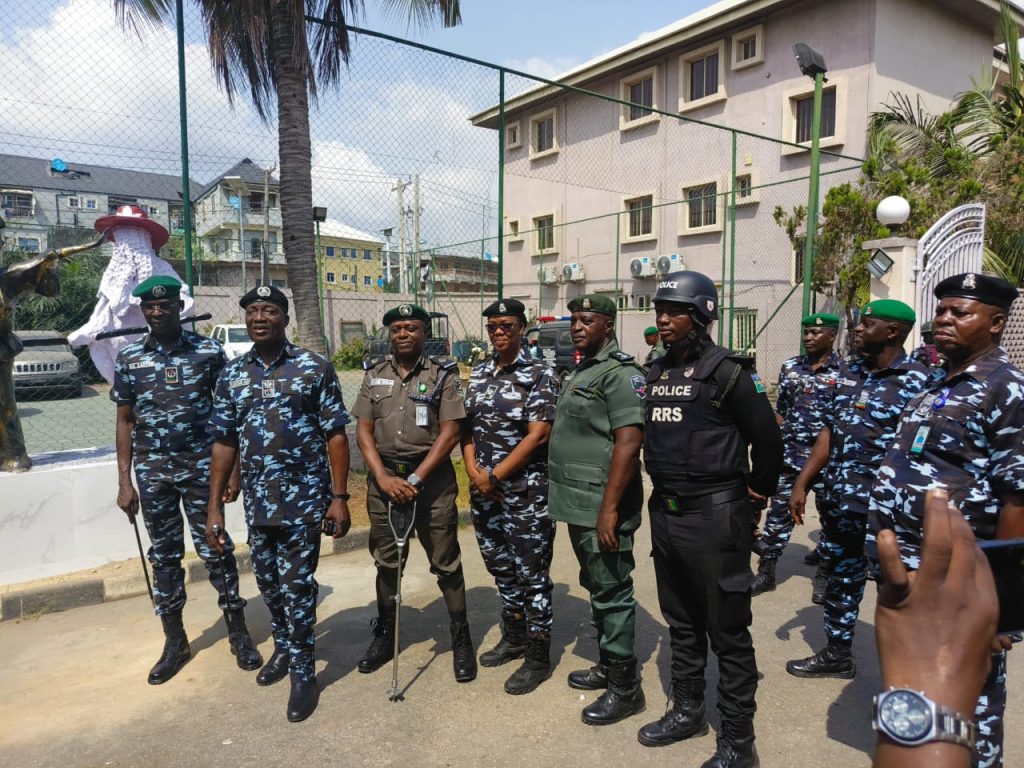


When CP Olohundare Jimoh took over as Commissioner of Police in Lagos State in February, he stepped into one of the most demanding security commands in the country. Lagos, Nigeria’s economic capital and Africa’s most populous city, presents a unique policing challenge: Dense population, complex socio-economic layers, high mobility, and a history of evolving criminal patterns.
From the outset, expectations were high, but so were the instructions.
Operating strictly within the strategic framework and operational directives of the Inspector-General of Police, IGP Olukayode Egbetokun, CP Jimoh moved swiftly to recalibrate policing in the state. Months later, the results are increasingly evident: Lagos has not recorded any major crime incident capable of threatening public safety or economic stability, while violent criminal activities that once dominated headlines have significantly receded.
Since assuming office, the Lagos State Police Command has publicly reported a sustained crackdown on violent crime and organised criminality. Command figures show that from February through December 2025, officers have cumulatively arrested at least 120 suspects in major operations against violent crimes, cultism, kidnapping, armed robbery and related offences, and recovered more than 32 stolen exotic vehicles as well as numerous firearms and incriminating exhibits. These figures include high-impact seizures of weapons and stolen property, underscoring the operational depth of current policing strategies.
Security analysts describe the period since February as one of the calmest Lagos has experienced in recent years. Incidents of kidnapping, previously a growing concern along boundary communities and key corridors, have dropped sharply. Reports of cult-related violence, traffic robbery, and organised street crime have also declined to their lowest levels in recent memory.
While crime has not been eliminated, an unrealistic expectation in a megacity, there is consensus that the balance has shifted decisively in favour of law enforcement.
At the heart of this turnaround is a deliberate enforcement strategy shaped by the IGP’s nationwide policing vision and executed locally by CP Jimoh. Acting on the Inspector-General’s emphasis on intelligence-led policing, proactive crime prevention, and visible deterrence, the Lagos command intensified sustained raids on identified criminal black spots across the state. These locations, long associated with cult gangs, armed robbery, and violent crime, came under consistent pressure through coordinated operations.
Unlike sporadic crackdowns of the past, the current approach has been marked by persistence. Police operations have been continuous, targeted, and intelligence-driven, denying criminal elements the opportunity to regroup. As a result, many notorious suspects have either been arrested or forced to flee Lagos entirely, significantly weakening criminal networks within the state.
One of the most visible outcomes of this strategy has been the disruption of cult activities. Cultism, particularly among youth gangs, has historically fuelled cycles of violence in parts of Lagos. Under CP Jimoh’s leadership, the command prioritised early intervention, surveillance, and swift arrests, preventing clashes before they escalated. Community leaders in formerly volatile areas now report extended periods of calm and uninterrupted social and commercial activities.

In further alignment with the IGP’s directive on specialised policing, CP Jimoh strengthened and expanded tactical capabilities within the command. Specialised units and crack teams were reorganised and reinforced, culminating in the creation of the Eko Strike Force. Designed as a high-impact, rapid-response unit, the Strike Force draws from elite tactical officers and focuses on violent crime suppression, targeted patrols, and intelligence-based arrests.
The operations of the Eko Strike Force have been largely understated, yet security insiders credit the unit with playing a key role in neutralising threats before they materialise. Its presence has also enhanced police response time, particularly in crime-prone areas and during night operations, contributing to the broader sense of security across the city.
Beyond crime control, CP Jimoh’s tenure has also been marked by an internal effort to address long-standing public concerns about police conduct. Acting in line with the IGP’s reforms on professionalism, accountability, and respect for citizens’ rights, the Lagos command tightened internal monitoring mechanisms. Allegations of police harassment and extortion, especially during stop-and-search operations, have noticeably reduced.
Civil society groups, commuter associations, and transport unions acknowledge that while complaints still occur, the scale has diminished. Senior officers attribute this to clear directives from the Commissioner, backed by the authority of the Inspector-General’s standing orders. Divisional Police Officers and unit commanders are now held directly accountable for the conduct of officers under their command, reinforcing discipline at all levels.
For Lagos residents, the impact of these changes is felt in everyday routines. Night-time movement has become less tense in many neighbourhoods, commercial transport operators report safer routes, and traders now operate longer hours with reduced fear of attack. In a city where confidence is as critical as infrastructure, the psychological effect of improved security cannot be overstated.
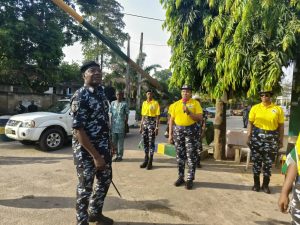
Members of the command’s management team attest to the CP’s workaholic nature. He doesn’t just sit in his office and give orders; he leads from the front to ensure that Lagosians do not live in fear.
Security experts note that CP Jimoh’s leadership style reflects a quiet but firm execution of policy. Rather than high-profile rhetoric, the emphasis has been on results-driven policing, consistent with the IGP’s nationwide approach. Operational briefings focus on outcomes, intelligence sharing, and inter-agency collaboration, particularly with the military, civil defence corps, and traffic management authorities. This coordination has strengthened surveillance across border communities, highways, and waterways previously exploited by criminals.
The improved security environment has also had economic implications. Lagos thrives on uninterrupted activity, and the absence of major crime incidents since February has reinforced its reputation as a relatively safe hub for business, investment, and leisure. For a city that competes on a global scale, sustained security stability remains a critical asset.
Nevertheless, challenges persist. Lagos’ size and complexity mean that criminal tactics can evolve rapidly, particularly in areas such as cybercrime and financial fraud. Sustaining current gains will require continuous adaptation, institutional support, and unwavering adherence to professional standards beyond individual leadership.
Still, within Nigeria’s broader security landscape, the relative peace currently enjoyed in Lagos stands out. It underscores what focused leadership, clear directives from the Inspector-General of Police, and disciplined execution at the state level can achieve, even within a challenging policing environment.
As CP Olohundare Jimoh continues his tenure, his stewardship of the Lagos command offers a compelling case study in pragmatic, directive-driven policing. Acting firmly on the orders of IGP Olukayode Egbetokun, he has helped reposition security in Africa’s largest city, delivering safer streets, quieter nights, and a renewed sense of normalcy for millions of residents.