Rivers State at the Turning Point: From Legacy to Leadership, the Imperative of Bold and Unfettered Governance By Mondy Selle Gold



History rarely announces its turning points with trumpets. More often, it whispers through moments of tension, restraint, and choice. Rivers State today stands at such a moment, poised between the gravitational pull of its past and the demanding promise of its future. In this delicate interval, two figures dominate the political horizon: Honorable Nyesom Ezenwo Wike, the indefatigable architect of a transformative era, and His Excellency, Sir Siminalayi Fubara, the quietly resolute steward entrusted with consolidating peace and translating governance into lived prosperity.
It would be both uncharitable and historically dishonest to deny Nyesom Wike his due. His imprint on Rivers State is indelible. From the audacious flyovers that reconfigured Port Harcourt’s urban rhythm to the expansive road networks that stitched together once isolated communities, Wike governed with muscular clarity and uncommon political courage. His administration invested heavily in education and healthcare, confronted environmental degradation with uncommon resolve, and asserted Rivers State as a subnational force that could neither be ignored nor diminished. Even beyond Rivers, his current stewardship of the Federal Capital Territory has been marked by visible infrastructural renewal, administrative reorganization, and enhanced security architecture.
Equally incontestable is the political fact that Wike made it possible for Siminalayi Fubara to emerge as Governor. Political succession, particularly in Nigeria’s complex ecology, does not occur by accident. It is midwifed by trust, calculation, and risk. For this, Wike deserves acknowledgment, not amnesia. Gratitude is not weakness, and history must record that bridge clearly.
Yet leadership, like parenthood, demands a season of release. No legacy matures under permanent supervision. The same hand that lifts must eventually let go, not out of indifference, but out of faith in continuity. Wike is not the first leader to have supported another into power, and he will not be the last. What distinguishes great political legacies from merely loud ones is the discipline to allow successors govern without interference, instigation, or incendiary commentary. Public threats, provocative statements, and political brinkmanship do not strengthen authority; they fracture it.
Governor Siminalayi Fubara’s own conduct since assuming office offers a study in restraint. In a state long caricatured by political heat, he has chosen calm over confrontation, patience over provocation. His leadership style has been marked by humility, God fearing values, pragmatism, and a rare refusal to weaponize power for personal vendetta. This temperament proved particularly consequential during the prolonged political turbulence that culminated in the declaration of a state of emergency on March 18, 2025 by President Bola Ahmed Tinubu. That episode, which saw the appointment of Vice Admiral Ibokette Ibas as Administrator, remains a cautionary memory of how quickly political disorder can eclipse democratic governance.
Available public records and verifiable public conduct reveal a disturbing and unmistakable trajectory. Nyesom Wike has increasingly adopted a posture of open confrontation and institutional disregard that is virtually without precedent among Nigeria’s thirty five states. This is not an isolated lapse in judgment, nor a momentary excess of rhetoric. It is a sustained pattern, deliberate in tone and corrosive in effect, marked by repeated public efforts to undermine the authority of a constitutionally elected successor while serving as a senior federal minister.
This reality places an unavoidable responsibility on the Presidency. Silence at such a moment is not neutral; it risks being construed as acquiescence. Authority at the center of government carries with it a duty to preserve order across the federation. When a cabinet level official persistently destabilizes a federating unit, corrective action ceases to be discretionary and becomes imperative. A prompt and unequivocal reprimand is required, not as an act of humiliation, but as a necessary measure to restore institutional boundaries and reaffirm the supremacy of constitutional governance.
The urgency of this intervention is widely felt across Rivers State. Indigenes and non indigenes alike share a sober and deeply rooted conviction that the state must not be dragged back to the edge of disorder it only recently escaped. This concern is not theoretical. Political memory in Rivers State is recent, painful, and instructive. History teaches, with ruthless consistency, that states do not collapse first because they are poor; they collapse because they are disordered. Economic decline is more often the consequence of political breakdown than its cause.
Indeed, wherever command structures lose coherence, progress slows and confidence erodes. Governance, much like sound engineering, depends on balance, proportion, and alignment. Once authority is fragmented and loyalties are deliberately unsettled, institutions begin to wobble, policy execution falters, and ordinary citizens become collateral victims of elite power contests. Order, quite simply, is the oxygen of progress.
This principle is neither novel nor merely philosophical. Scripture captures it with stark clarity: “Every kingdom divided against itself is brought to desolation; and a house divided against a house falls” (Luke 11:17). Beyond its theological roots, this is a timeless axiom of statecraft. Fragmentation breeds inefficiency, inefficiency corrodes legitimacy, and legitimacy once lost is difficult to restore.
Stability, therefore, is not a ceremonial virtue reserved for speeches. It is the backbone of economic confidence and the silent guarantor of social cohesion. Markets are unsentimental. Capital does not respond to noise or bravado; it responds to order and predictability. Long before investors analyze fiscal indicators or development blueprints, they study political behavior. As former German Chancellor Helmut Schmidt warned, “The biggest enemy of economic development is political uncertainty.” Where governance appears unsettled, investment hesitates. Where leadership seems perpetually contested, capital simply relocates.

Communities measure peace by similar standards. They do not judge stability by the eloquence of official pronouncements, but by the reliability of institutions and the foreseeability of daily life. A peaceful society is not one without disagreement, but one where decisions are taken, authority is respected, and governance proceeds without constant disruption. Nelson Mandela captured this balance when he observed that a good leader debates frankly, decides firmly, and then stands by that decision. Predictability, not propaganda, is what ultimately restores public trust.
Comparative political experience leaves no room for ambiguity, and it is within this historical and moral frame that the present moment must be judged. Regions that have achieved durable stability and sustained development did so precisely because dominant political actors made a conscious decision to subordinate personal ambition to institutional order. Post war Germany rebuilt not through personality driven power struggles, but through disciplined respect for structures that outlived individual leaders. Contemporary Rwanda advanced by privileging national coherence over elite theatrics, choosing order over spectacle and discipline over disruption.
Rivers State now stands before the same inflection point. The time has unequivocally come for Nyesom Wike to place institutional stability above personal political calculations. No individual, regardless of past contributions or historical stature, can be permitted to operate above the constitutional order or hold a federating unit hostage to unresolved ambition. Leadership matures when influence is exercised with restraint, not when authority is continually asserted through confrontation.
A return to factionalism would not merely constitute a political miscalculation; it would represent a failure of responsibility to both present and future generations. The path forward demands restraint, respect for constitutional authority, and a shared recognition that governance is not a battlefield for egos, but a platform for service. When leadership aligns, the state advances. When it fractures, the people bear the cost. The destructive cycle of perpetual political confrontation, where crises are endlessly recycled rather than resolved, must come to an end.
It must also be noted that in governance, as in Scripture, the warning is clear and timeless: confusion is never divinely inspired, for “God is not the author of confusion, but of peace” (1 Corinthians 14:33). Rivers State must choose peace anchored in order, and progress sustained by unity of purpose. In candid terms, that necessary shift begins with Nyesom Wike choosing institutional equilibrium over personal dominion.
Governor Fubara’s alignment with the All Progressives Congress (APC) should be read through the lens of functional governance rather than partisan sentiment. As the constitutionally recognized leader of the ruling party in Rivers State, his foremost obligation is not to political nostalgia, but to the welfare of the people he serves. This duty requires that transformative initiatives in healthcare delivery, affordable shelter, educational access, grassroots development, and long term economic resilience be deepened, expanded, and driven with greater urgency, consistent with global development benchmarks and the APC’s Renewed Hope policy direction. Governance is not an archive of inherited loyalties; it is an adaptive mechanism that, when necessary, must recalibrate alliances to advance the collective interest.
At the same time, constitutional clarity must prevail. Wike is not a member of the APC and therefore cannot determine who flies its flag in the 2027 general election. Political boundaries matter because institutions matter. Respect for party constitutions is not pedantry; it is the scaffolding of democratic order. On this score, restraint is again the wiser path. Responding publicly to every unguarded statement from a predecessor only amplifies discord. Silence, when principled, can be a form of authority.
It is therefore deeply troubling when claims are made that a sitting governor’s second term would “ruin” another leader’s political career. Such rhetoric personalizes governance and reduces public office to a zero sum contest of egos. Leaders are meant to serve the people’s will, not subordinate it to private anxieties. Rivers State belongs neither to Wike nor to Fubara alone. It belongs to its people, whose aspirations extend beyond political skirmishes into jobs, dignity, security, and opportunity.
The present juncture demands decisiveness, not hesitation. Governance cannot survive in an atmosphere engineered by provocation; coherence must outweigh calculated disorder. To allow anything less would be to abandon the basic obligations of national leadership. In this context, the responsibility of President Bola Ahmed Tinubu is central. True statesmanship is measured by the courage to intervene early, not to deepen fault lines, but to restore discipline and reaffirm the boundaries of authority.
It is therefore essential that the Minister of the Federal Capital Territory be urged to disengage from past rivalries and align with the broader imperative of stable governance in Rivers State. Governor Fubara’s political realignment reflects administrative realism rather than personal ambition, and it warrants institutional backing, not sustained public undermining. Democracies weaken when internal sabotage replaces constructive engagement.
Enduring legacies are not secured through perpetual oversight or public contestation, but through trust in the structures one has already built. Nyesom Wike’s record is firmly etched into the state’s developmental narrative and requires no daily vindication through political skirmishes. By contrast, Governor Fubara’s authority flows directly from constitutional mandate, granting him the right and responsibility to govern without obstruction or manufactured distraction. Rivers State stands to gain not from amplified rhetoric, but from focused execution, not from agitation, but from measurable outcomes.
A river does not reverse its course to pay homage to its source. It advances, shaped by its origins yet propelled by its destination, moving steadily toward the vast horizon that lies ahead.
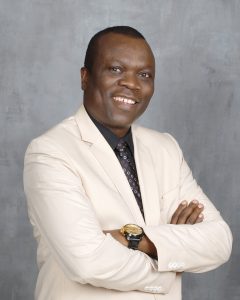
Professor Mondy Selle Gold, PhDs
Professor Gold is an American-based scholar, a Fellow of the Chartered Institute of Leadership and Governance, and the authorized biographer of Major Isaac Adaka Boro, immortalizing the legacy of one of Nigeria’s most iconic freedom fighters. He is a distinguished recipient of the African Eagles Global Financial and Academic Icon Award, as well as the United States President’s Lifetime Achievement Award. In addition, he serves as Co-Chairman of the African Policy and Research Consortium, contributing to policy development and scholarly discourse across the continent
Written by Al Humphrey