The Making of a Kalabari Chief and the Dance Steps of the Amanyanabo of the Source




By Al Humphrey Onyanabo
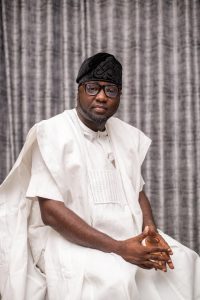
Sunday, January 26, 2026, marked yet another deep and immersive excursion into the rich tapestry of Kalabari culture and tradition. We were in Buguma for the Polo Diye of the young chief, Alabo Dienyefa Briebibo Dokubo-Asari, son of the Amanyanabo of the Source, Elem Kalabari. The ceremony took place at Omubo Birinaomoni, following the first stage of his chieftaincy journey held the previous week at Edi Polo.
The Four Stages of Kalabari Chieftaincy
According to Kalabari custom and tradition, chieftaincy is attained through four distinct stages.
The first stage begins when an intending chief presents himself to his immediate family of chiefs.
This was successfully done the previous weekend. Some aspirants pause at this point, sometimes for months or even years, as each stage is capital intensive—though, in some cases, two stages may be completed in a single day.
The second stage, which we witnessed on this occasion, involves the new chief presenting himself to his compound chiefs. Attendance can range from 50 to over 100 chiefs, and the financial commitment required is substantial. Many chiefs remain at this stage for six months or longer before proceeding. However, to gain wider recognition and influence, a Buguma chief must advance further to present himself to the Buguma Council of Chiefs.
(For clarity, each Kalabari town—Buguma, Abonnema, and others—has its own administrative arrangements for chieftaincy rites.)
The third stage is usually held at the King Amachree Memorial Hall, Buguma, and it is both grand and expensive. It is a public declaration of arrival—a celebration of status, wealth, and prestige, marked by elaborate merriment.
After completing stage three, a chief may choose to pause and enjoy the splendour of his new status. Indeed, some have remained chiefs for years without advancing further.
The fourth and final stage is reserved for the elite. Known as Se Diye, it is the presentation of the chief to the entire Kalabari Kingdom, often referred to as Kalabari Se. This is the pinnacle—the numero uno. Chiefs from across the kingdom who have also completed Se Diye are invited. While some chiefs come together to present themselves collectively, others, confident in their means, select a date of their own.
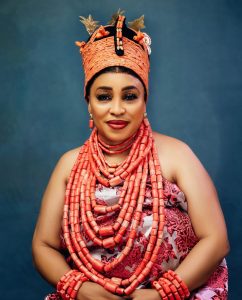
On this day, the chief hosts dignitaries with lavish food, drinks, and gifts. It places him in a distinct class and affords him direct access to the most prominent chiefs in the Kalabari Kingdom. Upon completion, he becomes a full-fledged Kalabari chief in every sense and may wear his Don anywhere within the kingdom.
Alabo Dienyefa Briebibo Dokubo-Asari is heading towards stages three and four later in February, and we shall follow the journey closely. When your father is the Amanyanabo of the Source, Alhaji Mujahid Abubarkr Dokubo-Asari, Dabaye Amakiri I, there is little to worry about.
Procession, Music, and Celebration
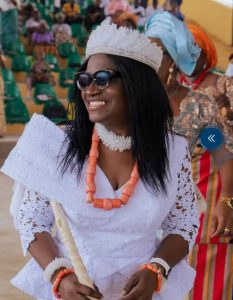
After his formal presentation to the compound chiefs at Omubo Birinaomoni—an assembly of distinguished chiefs—the new chief was escorted by family members and youths to Edi Polo in a colourful procession marked by folk songs and spirited dancing. That, unmistakably, is the Kalabari way.
At Edi Polo, directly in front of the memorial hall, canopies had been erected and music blared from giant speakers. The successful completion of the second stage called for celebration.
A group of family women opened the floor. Forming a circle, they danced gracefully to the rhythm of the legendary Akaso Cultural Society. Their movements were harmonious and deliberate—step by step, waist wriggling gently when the song demanded it. This was Kalabari dance in its purest form, a welcoming ritual with more excitement yet to come.
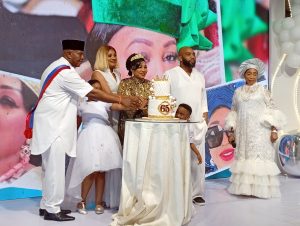
As guests arrived, they paid their respects under the canopy where the Amanyanabo and his son, the new chief, were seated. Congratulations were exchanged, prayers offered, and each group moved to its designated area—chiefs, youths, and women, all properly arranged.
Among the dignitaries present were High Chief David Briggs, who arrived with six chiefs; Alabo Obomate, Chairman of the Obuama Council of Chiefs; HRM Tonye Williams, Amadabo of Mbiama; and HRM Oduboye T. Penuel, Amadabo of Namasibi, who came with two of his chiefs. I also noted
Alabo Lawrence Samuel Abraham Sokari Danagogo and Alabo Ala Hart.
I also saw the distinguished Alabo Dr. Ebbi Robinson, Alabo Dr. Barango- Tariah Hope and Alabo Ebidomo Abbey-Suku Amachree( all members of the Elem Kalabari council of chiefs).
How can I forget Dr. Mrs. Vivian Elenwo, women leader of The Source. She had her women with her.
The list was long and impressive.
There was a constant exchange of handshakes and warm embraces. In truth, there were few strangers—almost everyone knew one another.
As the Akaso Cultural Society wound down, the women took their seats and the Ogele cultural troupe of the Amanyanabo took over, warming up with classic Ijaw songs. Their rhythms demanded Niger Delta-style gyration, and soon bodies in the crowd began to sway.
In one corner, in front of a two-storey building, a group of young girls—none older than eighteen—danced joyfully, handkerchiefs waving in the air. As the tempo rose, an Amama soldier, fondly known as Oga na Master, stepped forward and began to dance near the Ogele singers. Almost instantly, the youths who had been dancing at a distance formed a line and made their way into the arena.
Women joined in. All uncoordinated.
The new chief rose to show appreciation, spraying naira notes. More women followed. The aroma of money filled the air. Soon,
it became a full-blown circle of singing, dancing women and youths.
Then, in a moment that electrified the gathering, the Amanyanabo himself stepped into the arena. He sprayed money generously on the dancers and moved towards the cultural troupe. The excitement surged. More people joined. This was no ordinary celebration—the Amanyanabo’s son does not become a chief every day. Today na today.
The King Dances
Suddenly, the rhythm changed. The Amanyanabo, visibly joyful, prepared to dance. The crowd erupted. Chiefs gathered around him as naira notes flowed freely. With staff in hand, he danced slowly but magnificently—measured, colourful, regal. The kind of dance only a king can perform.
I watched from a corner. That is my job.
This dance was the climax. As he moved around the arena, everyone joined him—smiling, dancing, celebrating. He was radiant. One could only wonder what thoughts crossed his mind as he surveyed the joyous crowd swirling around him.
A Message to the People
After the merriment—remarkably, without a single bottle of alcohol served—the Amanyanabo addressed the gathering. As Polo Dabo (Head Chief) of Edi Polo, he used the occasion to speak directly to the youths and families.
He announced:
“As you all know, we started last year to pay WAEC, NECO, and JAMB fees for our children who want to go to school. From next week, you will start receiving alerts.
Look for something to do—they say an idle mind is the devil’s workshop. Everybody who wants to go to school will be supported, except those in private universities. Exceptions will only be made for those studying Pharmacy and Medicine.
Anyone in schools of nursing, schools of health sciences, state and federal universities will be on scholarship. Go to school or learn a trade—we will pay.”
Some nodded. Others clapped. A few shook their heads in amazement. Hope had been stirred.
After closing prayers, we dispersed.
Basoene. Tomorrow is another day, as the Kalabari people would say.
By: Al Humphrey Onyanabo,
The Storyteller,
Tel: 08109975621
Email: nigeria360online@gmail.com