Senate Under Scrutiny as Akpabio’s Wife’s Prayer Visit Raises Questions Over Security, Protocol

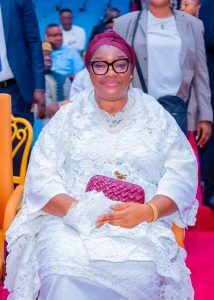
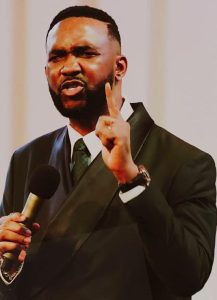
An eyewitness account by Mfonobong Iniobong, National Assembly Staff
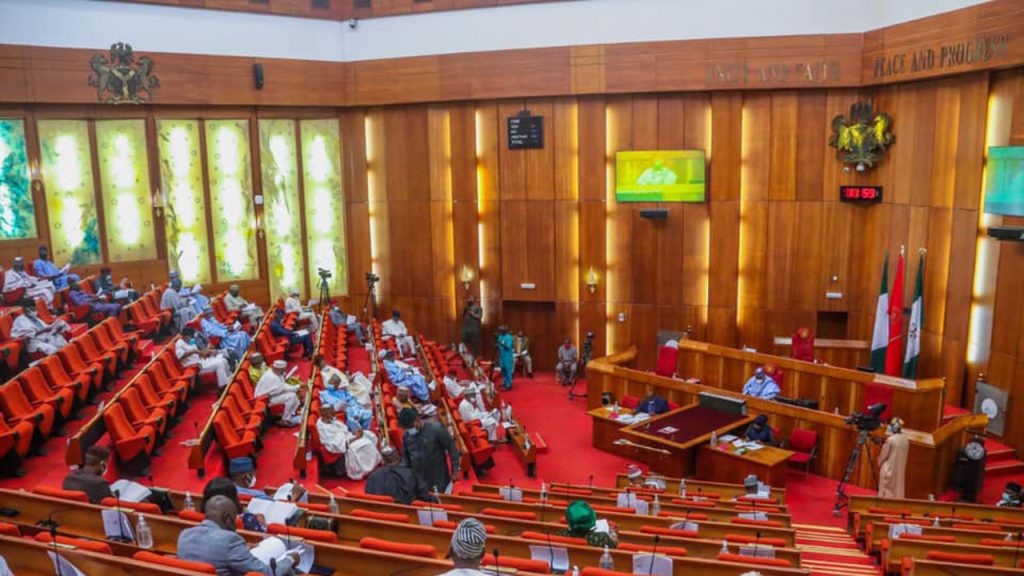
Fresh questions have emerged over the observance of institutional protocols, security procedures and the sanctity of the National Assembly following a visit by Nneoma Akpabio, wife of the President of the Senate, Senator Godswill Akpabio, to where Senators eat and several other places that are out of bounds to visitors with certain prayer warriors for prayers on Thursday at the Senate wing of the National Assembly complex.
Speaking to journalists, Mfonobong Iniobong, a native of Ikot Ekpene Udo, Nsit Ubium Local Government Area, Akwa Ibom State, who is a National Assembly staff, who was physically present at the premises that day while official duties were ongoing, expressed concern over what he described as a recurring practice of using a public institution for private religious activities during working hours.
According to Iniobong, the incident occurred while staff members were still on duty, raising questions about compliance with established civil service procedures, access regulations and the protocols governing the use of National Assembly facilities.
”I was physically present on Thursday when she arrived. We were still on duty, yet she came to the senators’ dining lounge to pray again during working hour, seemingly disregarding the established rules and procedures governing the use of government facilities,” Iniobong said.
The staff member questioned the propriety of using a sensitive government facility, particularly one within the legislative complex, for activities that he believes should not be allowed to undermine institutional order and established administrative procedures.
Iniobong boldly asked if Mrs Akpabio doesn’t want her husband to leave the Senate President’s seat, asking if it’s her husband’s personal property to remain as the president of the Senate.
”What exactly is she going there to pray about? The National Assembly is a public institution, not her husband’s private residence or personal property. It is where laws are made, and its sanctity, dignity and institutional character must be protected,” he added.
Beyond Mrs Nneoma Akpabio’s prayer visit which is an abberation itself, Iniobong expressed particular concern over what he described as the apparent failure of security operatives, including personnel of the Department of State Services (DSS) and the Sergeant-at-Arms, to question or scrutinize the circumstances surrounding the visit.
He argued that the responsibility of these security agencies extends beyond the physical protection of individuals occupying political offices to safeguarding the integrity, security and institutional independence of the National Assembly.
Of particular concern, he said, was the apparent absence of any meaningful intervention by security personnel who, according to his account, were present during the incident.
The eyewitness also raised constitutional questions about the status of spouses of presiding officers in Nigeria’s legislative institutions, arguing that the office of the wife of the President of the Senate is not an elected or constitutionally established public office.
”Is there any provision in the Nigerian Constitution that recognizes the office of the wife of the President of the Senate? There is none. Nobody elected her to represent Nigerians or exercise authority over the National Assembly. The legislative institution must not be reduced to a place where personal interests and activities take precedence over established rules,” he said.
Iniobong warned that allowing what he characterized as a pattern of disregard for institutional protocols to continue unchecked could create a dangerous precedent, weaken administrative discipline and erode public confidence in the security arrangements governing the country’s parliament.
He consequently called on the leadership of the National Assembly, the DSS and the Sergeant-at-Arms to clarify the applicable rules governing access to sensitive parliamentary facilities and ensure that security protocols are applied consistently, irrespective of an individual’s proximity to political power.
He stressed that the National Assembly must remain an institution governed by constitutional authority, established procedures and public accountability, rather than personal influence or political privilege.
The development, as presented in Iniobong’s account, raises broader questions about the distinction between public office and private influence, the enforcement of parliamentary access regulations and the responsibility of security institutions to protect the independence and dignity of Nigeria’s legislature.
For an institution entrusted with the responsibility of making laws, oversight of government and defending democratic principles, the National Assembly must demonstrate that its rules are not merely written directives but standards that apply to everyone, regardless of status, influence or family connections.