Serving Beyond 35 Years: The Nigeria Police and the Conspiracy of Silence
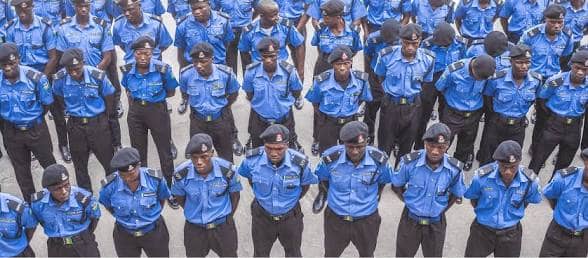


Somewhere in a police barracks tonight, an officer is putting his children to bed. He joined the Force years ago, gave it his youth, and has waited patiently for the promotion he has earned. He follows the rules because he believes the rules will, in the end, follow him. Now he hears that retired officers may be coming back, and he is afraid to ask what that means for his rank, his seniority, and his future. He is afraid because he cannot see a single voice of authority willing to ask on his behalf.
That silence is the story I want to talk about.
The question no one wants to ask
The facts are not complicated. The rule says a public servant leaves at 60 years of age or after 35 years of service, whichever comes first. On January 31, 2025, the Police Service Commission retired 455 senior officers after a dispute over how their dates of first appointment should be computed. The officers went to court. The National Industrial Court declared the retirement unlawful and ordered reinstatement, and the Court of Appeal later dismissed the appeals. A fresh order on September 22, 2026 has now halted the reinstatement. “Court Halts Reinstatement Of 455 Retired Senior Police Officers” — Fresh Injunction Stalls Earlier Court-Ordered Return To Service – TheNigeriaLawyer +2
The legal fight is what courts are for. What troubles me is how little has been said by those whose job it is to speak.
Police Service Commission: what changed?
The Commission carries the heaviest burden here, because promotion, appointment and discipline in the Force are its responsibility.
In January 2025, it retired these officers, saying they had passed the threshold. That was a considered decision, taken at the highest level, and it affected hundreds of careers. When the judgment came, the Commission said it was studying it and might appeal. It did appeal, and it lost.
Then, according to one report, the Commission approved the regularisation of these officers’ dates of first appointment in June 2026. The Force began bringing them back.
So I put the question directly to the Commission. What changed? Did new evidence emerge that the Commission did not have in January 2025? Were the officers’ dates of first appointment wrong when it retired them, or are they wrong now? If the 2025 decision was right, why has it been undone? If it was wrong, who answers for the hundreds of officers it sent home?
Either answer is serious. The Commission owes the Force, and the public, an explanation in plain language. Serving officers cannot be expected to trust a promotion system whose own decisions swing from one direction to the other without a word of reasoning.
Where is the Ministry of Police Affairs?
The Ministry does not decide promotions. That belongs to the Commission. But it does set policy guidelines for the Force. A dispute that touches how service is counted, how retirement works and how the Force plans for the future of state policing is a policy matter. The Ministry should be telling the country what its guidelines are and how this episode fits into them. I could find no public position from it.

Where are the National Assembly committees?
The House of Representatives Committee on Police Affairs and the Senate Committee on Police Affairs have the power to summon officials, demand answers and hold public hearings. I searched for a public statement or hearing from either on this matter and found none. If I am wrong, then the message has not reached the officers who need to hear it. Either way, there is a gap.
Where are our constitutional lawyers?
Nigeria has some of the finest legal minds on the continent. A question that touches how public service years are counted, how far court orders can reach and how they should be challenged affects every civil servant in the country. Is there truly nobody willing to say what the rules mean?
Silence is not neutrality. When those who know the law stay quiet, the loudest voice wins, and it is not always the correct one.
What the silence costs
The officers who followed the rules. They have waited their turn. If retired officers return to the same ranks, some of them will be pushed down or aside. Years of loyalty will count for nothing.
The Force itself. A police service survives on discipline, and discipline depends on belief in fairness. An officer who thinks the system is rigged does the minimum, and in a service that asks people to put their lives on the line, the minimum is not enough.
The money. Every naira spent on salaries and arrears for officers already past their limit is a naira not spent on training, equipment and welfare for those who are serving.
The future of state police. This is what worries me most. When Nigeria moves toward state policing, states will draw officers from the federal Force to start their own structures. If the lesson of this episode is that service can be counted differently after the fact, every secondment and recruitment will become a fight. A state police built on a disputed precedent starts with cracked foundations.
A weak police force does not lead the way for anything. It has to be carried.
Must we wait for a disaster?
History is full of countries that understood the importance of policing only after it failed. By then, the price was paid in lost lives, lost trust and lost years. Must the police be damaged before we all realize what we had?
What should happen now
I am not asking anyone to defy a court. I am asking those with the power and the duty to speak to do so:
The Police Service Commission should explain publicly why it retired the officers in 2025, what changed by 2026, and how it will protect the promotions and seniority of serving officers.
The Ministry of Police Affairs should state the policy guidelines that apply to service computation and retirement.
The House and Senate Committees on Police Affairs should call public hearings and put seniority, cost and precedent on record.
The President should set up a committee of the Attorney-General, the Head of the Civil Service, the Inspector-General of Police and the Police Service Commission to give an authoritative interpretation of the Public Service Rules on employment and retirement.
Constitutional lawyers and civil society should examine the issues openly so the public can understand them.