Ope Banwo Puts Tinubu’s First-Term Record on Trial Ahead of 2027



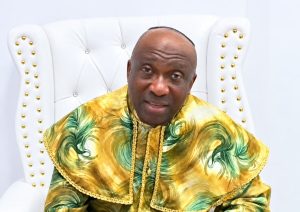
Political analyst and self-styled Mayor of Fadeyi, Dr Ope Banwo, has launched a 12-episode review of President Bola Tinubu’s first-term performance, setting the stage for a public examination of the administration’s record ahead of the 2027 general election.
The series, titled The Jagaban Scorecard, aims to assess the President’s performance through issues affecting Nigerians, including the economy, cost of living, security, foreign exchange, electricity, infrastructure, unemployment, healthcare and education.
Banwo says the assessment will focus on evidence and outcomes rather than political loyalty, propaganda, rumours or public sentiment. It will seek to determine whether Tinubu’s policies have improved the country’s conditions or made everyday survival more difficult for ordinary Nigerians.
Among the questions the series intends to examine are whether Nigerians are safer than they were three years ago, whether exchange-rate changes have translated into economic relief, and whether infrastructure spending is delivering measurable benefits beyond the commissioning of projects.
The review will also assess job creation, asking whether the country is generating sustainable employment and careers or relying increasingly on informal economic activity. Other areas include healthcare, education, federalism, democratic governance and the President’s Renewed Hope agenda.

The series is expected to conclude with Banwo’s overall assessment of Tinubu’s record, although the review is presented as an effort to provide voters with information rather than campaign for or against the President’s re-election.
Banwo said the project was not intended as a praise session for the All Progressives Congress (APC), a revival platform for the Peoples Democratic Party (PDP), or a forum for supporters of the Labour Party (LP).
He argued that Nigeria’s political debate had become so polarised that praising Tinubu could attract accusations of being an APC supporter, while criticising the President could lead to being labelled an “Obidient”. According to him, even those who seek clarification on government policies risk being attacked by supporters of opposing political camps.
Banwo acknowledged that his assessment might upset supporters across party lines, saying some APC and Labour Party supporters could disagree with his conclusions, while PDP supporters might consider his criticism of the President insufficient.
He maintained that the exercise was neither designed to help Tinubu win the 2027 election nor to prevent his re-election.
According to Banwo, voters should be equipped with information, context and facts to make their own decisions rather than rely on politicians to determine their political choices for them.
He said political campaigns often present competing narratives, with politicians telling favourable stories, supporters promoting idealised accounts and opponents emphasising negative portrayals.
Banwo argued that a credible assessment must look beyond these competing narratives and allow evidence to guide the conclusions.